Rabies
Find out more about rabies, as well as the prevention and treatment methods.
About
Rabies is a highly contagious acute viral infection of the nervous system. The virus is contained in the saliva of a wild or domestic animal infected with the rhabdovirus. It is transmitted to humans through a bite, a scratch, or from licking, if the saliva comes into contact with broken skin.
Most human rabies cases are associated with infected domestic dogs, although other animals may be affected, such as jackals, mongooses and cats. Transmission from person to person is very rare.
Rabies cases in Cape Fur Seals
There are currently several
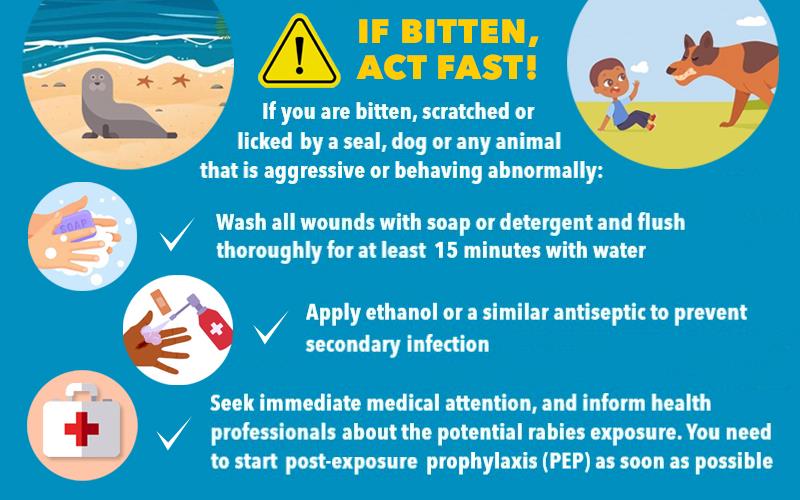
confirmed cases of rabies in Cape Fur Seals. If you come across a seal that is behaving unusually or aggressively, move away from the animal or leave the water if you are surfing, swimming or diving. Anyone bitten by a seal must seek immediate medical assistance. Report seal attacks/bites immediately to the City at
021 480 7700.
For more information about rabies, visit the
National Institute for Communicable Diseases (NICD) website.
Prevention
Preventative measures include:
- Vaccination of all domestic dogs and cats against rabies from 12 weeks of age, again 12 months later, and then every 1-3 years.
-
Monitoring of domestic pets: keep a close eye on your pets for any signs of unusual behaviour such as aggression, excessive drooling, paralysis, or difficulty swallowing.
- Immediate administration of rabies post-exposure prophylaxis (PEP) following exposure to rabid or suspected rabies-infected animals can prevent rabies infection in humans.
- Pre-exposure prophylaxis (PrEP) is recommended for people in high-risk occupations (laboratory workers handling live rabies and related viruses) and people whose professional or personal activities might lead to direct contact with infected animals (animal disease control staff and wildlife rangers).
please note
PrEP does not replace the need for PEP. Any person exposed to a suspected rabid animal should still seek post exposure care.
Symptoms
There is no treatment for rabies once symptoms appear. Rabies disease is 100% fatal.
To prevent the onset of symptoms,
visit your nearest doctor, clinic or hospital immediately for PEP care.
An infected person who has not been treated with PEP may start experiencing symptoms 1 to 3 months after exposure. In rare cases, symptoms can develop after a week or up to a year following exposure.
Initial symptoms of rabies may include:
- discomfort or pain at the site of the (previous) wound
- fever
- headache
- nausea
- vomiting
As the virus moves to the central nervous system, progressive and fatal inflammation of the brain and spinal cord develops.
Symptoms at this stage may include:
- hyperactivity or excitable behaviour
- convulsions (involuntary jerking and muscle contractions)
- hallucinations
- lack of coordination
- hydrophobia (fear of water)
- aerophobia (fear of drafts or fresh air)
- paralysis
Report suspected cases
If you suspect an animal may have rabies in your community, report it to your
local state veterinarian immediately.
If you come across a wild animal that is behaving unusually or aggressively, inform the relevant authorities immediately:
Would you like to print this page?
print